Book Now

Written by: Bradley & Demi Rinsma

BEYOND THE SPOTS, UNDERSTANDING THE WORLD OF LEOPARDS.

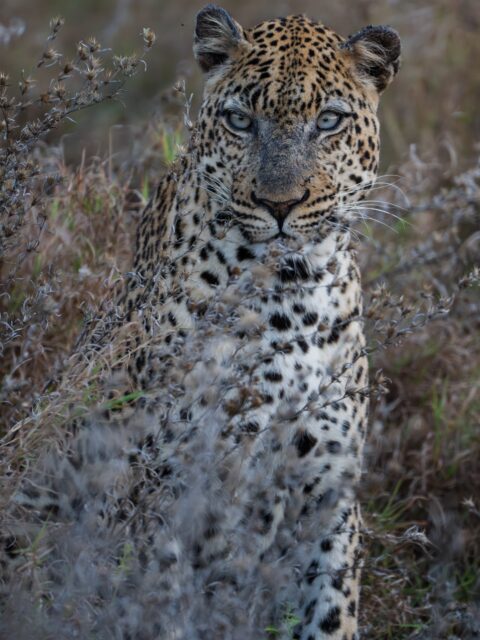
Leopards, known for their elusive nature and stunning beauty, are one oft he most captivating big cats in the wild. Their solitary nature and camouflage make them challenging to spot in the wild. However each leopard possesses unique physical characteristics that make individual identification possible, particularly through their distinct spot patterns and facial markings.

Each leopard’s pattern is as distinctive as a human fingerprint, making it possible to track individuals over time and across different territories.

When observing a leopard, it’s important to note the size, shape, and arrangement of these rosettes. For instance, some leopards have closely spaced spots, while others may have larger, more widely spaced rosettes.

This variation can aid in recognising specific individuals, especially in areas where multiple leopards coexist.

In addition to their body patterns, leopards have specific markings on their faces that contribute to individual identification. The whisker spots, which are small black marks located just above their whiskers, can differ significantly from one leopard to another. physical characteristics are vital for identification, understanding leopard behavior is equally important.

Each leopard has its own temperament and habits, which can provide clues to its identity. For example, some leopards are more aggressive, while others may exhibit more cautious behavior. Additionally, leopards may have preferred hunting grounds or specific patterns of movement that can help observers recognize them over time.

For instance, a leopard that frequently drinks in a particular water source or regularly patrols a specific area might develop a pattern that allows one to predict its movements. 

By learning about these behavioral traits, we can increase our chances of spotting leopards in the wild. 

To maximize the chances of seeing a leopard, it’s essential to become familiar with the environment where they reside. Understanding the local geography, prey availability, and water sources can help in anticipating leopard movements. Tracking tools & camera traps have also revolutionised leopard monitoring, providing valuable data on their habits and movements.

“I have always been captivated by the movements of animals, particularly leopards”

Their elusive nature intrigues me, prompting a desire to understand where they roam and the reasons behind their paths. This fascination fuels my passion for wildlife observation, data capturing and analysis to greater understand how each individual fits into the greater scheme of things.

There’s an unparalleled joy in predicting a leopard’s movements and successfully locating the elusive creature.

The thrill begins with careful observation and understanding of its habits, from preferred hunting grounds to water sources.

My heart races as I come around the corner and I hear “Ingwe, Ingwe” coming from the tracker In front of the vehicle. Ingwe meaning leopard in the Shangaan, the language commonly spoken in the area. When hours of patience and keen tracking paying off, the moment you spot that leopard feels like a personal triumph.

Finding that leopard and witnessing the excitement on my guests’ faces is truly rewarding. 

Their joy makes every hour spent tracking and understanding the leopard’s movements worthwhile. 

“With each sighting, we gain a deeper appreciation for these remarkable creatures, one spot at a time”

.

Identifying leopards in the wild is a rewarding endeavour that combines observation, patience, and an understanding of individual characteristics. By focusing on spot patterns, facial markings, and behavioural traits, we can become more adept at recognising these beautiful animals & gain a better understating of their movements.
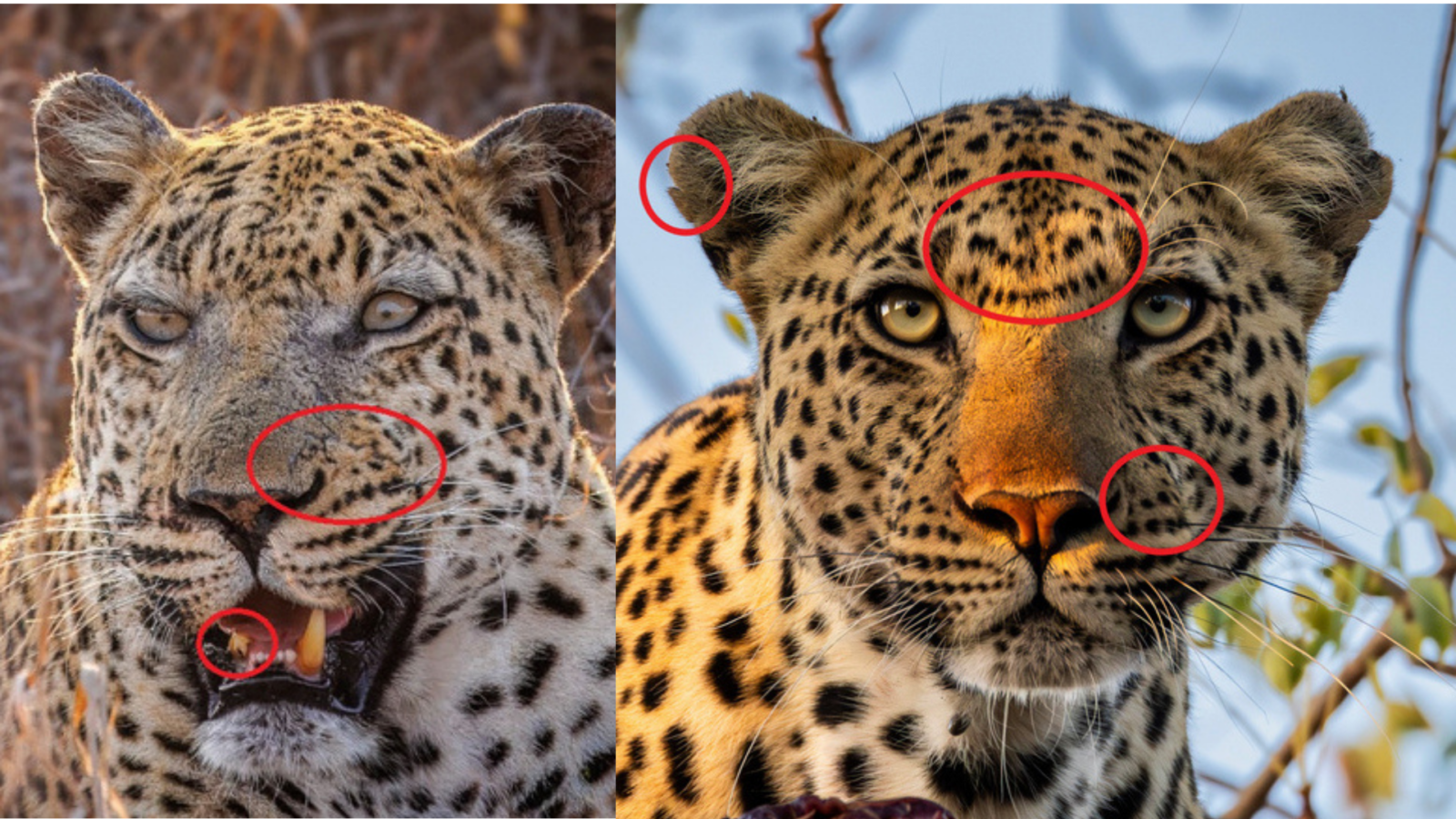
Leopards identified by unique characteristics
Each leopard has it's unique characteristics such as broken teeth or scars
Map of Ximuwu's traverse area where different leopards were located
Ximuwu traverse area with indication where different leopards where seen

social media

The Latest from Instagram

  • The male kudu is one of the most impressive antelope you’ll encounter at Ximuwu. Tall, elegant and crowned with those remarkable spiral horns — which can reach over a metre in length — they truly stand out. Even with their size, they move quietly and cautiously, relying on sharp hearing and subtle colouring to stay perfectly aware of everything around them.

Male kudus are mostly solitary or form small bachelor groups, unlike the females who gather in larger herds. Their twisted horns are used in fights for dominance during the mating season, and each set of spirals is unique — almost like a fingerprint. Observing a bull kudu during a game drive is always a fascinating part of the day.
  • A male lion recently wandered right up to the hide, calm and majestic, giving guests inside a truly rare and unforgettable experience. Safe inside the hide, you can watch this magnificent creature just metres away — an encounter most people can only dream of.

Not only a photographer’s dream, but who else is secretly imagining being this close to a lion, completely safe and relaxed?
Who would dare to sit there and soak it all in? Tag the friend who’d jump at the chance… or the one who’d be frozen in awe!

Only at Ximuwu do these extraordinary moments happen. 🦁✨
  • One of the unique offerings at Ximuwu is our Sound Safari, a setup that allows you to hear the wild in incredible detail. With our specialised equipment, every sound around you is gently amplified — creating an incredibly immersive experience.

Picture yourself sitting on the lodge deck while elephants drink just metres away, hearing the rumble from deep inside their bellies, hippos splashing in the dam, and the constant chorus of birds and insects all around. On game drive, the smallest rustle suddenly becomes part of the story.

It’s a completely different way to connect with the bush, and it really adds something special to every moment.
Would you give the Sound Safari a try on your next visit? 🐘🌿🎧
  • From winter’s bare branches to summer’s lush green canopy, our baobab stands tall as a true symbol of life at Ximuwu. This ancient tree has watched countless sunrises and stories unfold — and it’s right here that we host our famous bush breakfast.

Which version speaks to you more: the raw beauty of winter or the full bloom of summer?

#BaobabTree #Ximuwu #TreeOfLife #BushBreakfast #NatureLovers #KlaseriePrivateNatureReserve #SeasonsOfAfrica
  • Here’s a look back at last week at Ximuwu — a collection of special moments that capture the essence of life in the Klaserie Private Nature Reserve. 
From serene wildlife sightings to relaxed afternoons soaking up the sounds of the bush, this is a place where time slows down and nature takes the lead.

No rush, no crowds — just space to breathe, watch, and connect. Every day brings its own magic, and every sighting feels like a gift.

Which moment from the bush would you love to savour the most?

#Ximuwu #KlaseriePrivateNatureReserve #SafariMoments #SlowSafari #LuxuryInTheWild #LifeInTheBush #SafariLife #WildlifeSouthAfrica  #AfricanSafari
  • Meet Silias — the legend of Ximuwu 🙌

He’s been with us the longest, and there isn’t a corner of Ximuwu he hasn’t looked after. From making fires and clearing the bush to working in the garden, collecting rubbish, and removing any uninvited visitors, he’s always one step ahead.

Always in for a joke, Silias keeps us smiling — and we even have our own special way of communicating with him 😄
And of course… his favourite task: locking every possible door to “keep everything safe for his boss “

Loved by guests, staff, and most animals (though definitely not by the mice and snakes), Silias is truly part of the soul of Ximuwu. Here’s to many more years with him!
Book Call