

 info@ximuwu.com
 +27 15 004 0340
Pages
Archives
Categories
Written by: Bradley & Demi Rinsma
BEYOND THE SPOTS, UNDERSTANDING THE WORLD OF LEOPARDS.
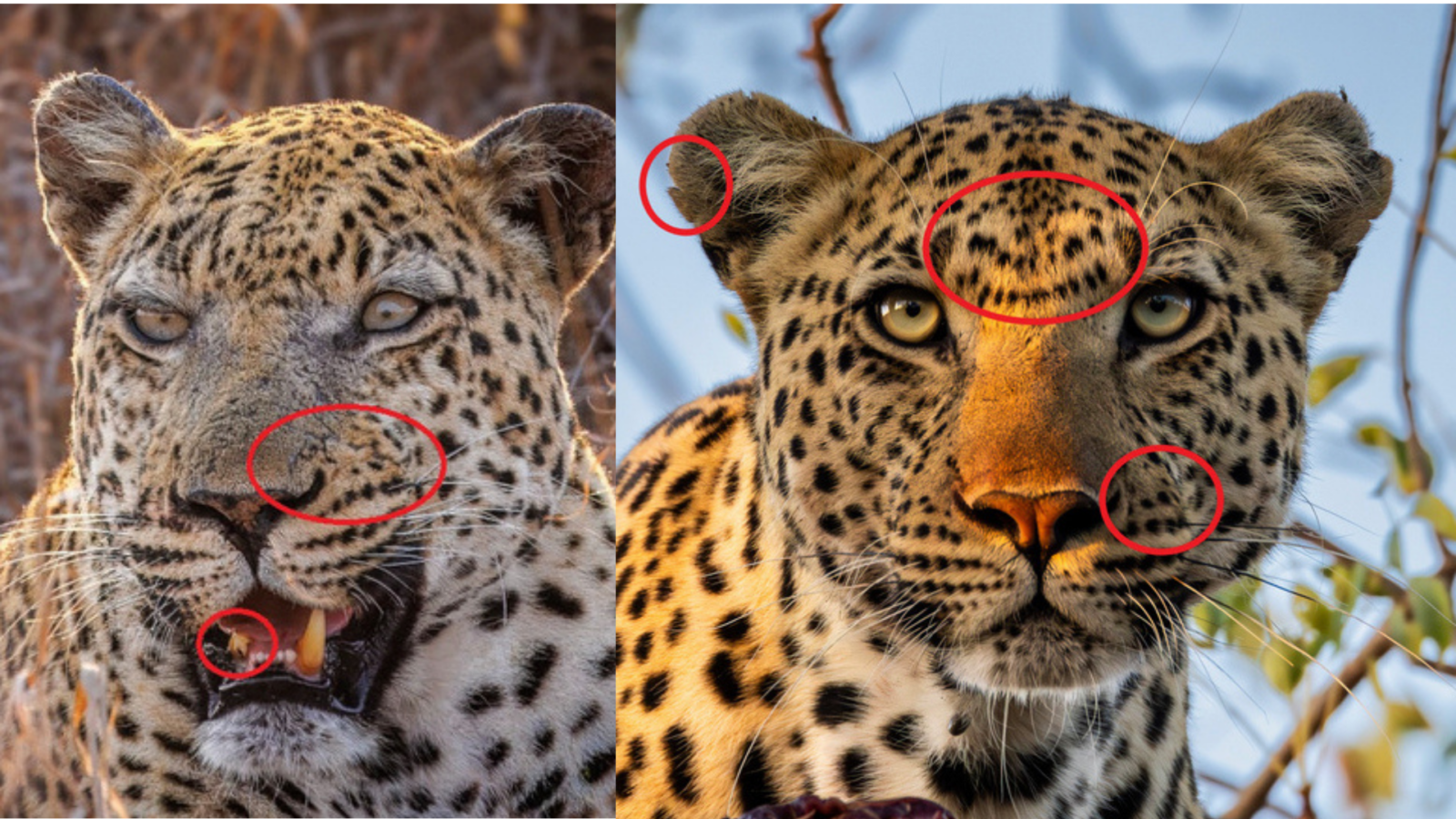
Leopards, known for their elusive nature and stunning beauty, are one oft he most captivating big cats in the wild. Their solitary nature and camouflage make them challenging to spot in the wild. However each leopard possesses unique physical characteristics that make individual identification possible, particularly through their distinct spot patterns and facial markings.
Each leopard’s pattern is as distinctive as a human fingerprint, making it possible to track individuals over time and across different territories.
When observing a leopard, it’s important to note the size, shape, and arrangement of these rosettes. For instance, some leopards have closely spaced spots, while others may have larger, more widely spaced rosettes.
This variation can aid in recognising specific individuals, especially in areas where multiple leopards coexist.
In addition to their body patterns, leopards have specific markings on their faces that contribute to individual identification. The whisker spots, which are small black marks located just above their whiskers, can differ significantly from one leopard to another. physical characteristics are vital for identification, understanding leopard behavior is equally important.
Each leopard has its own temperament and habits, which can provide clues to its identity. For example, some leopards are more aggressive, while others may exhibit more cautious behavior. Additionally, leopards may have preferred hunting grounds or specific patterns of movement that can help observers recognize them over time.
For instance, a leopard that frequently drinks in a particular water source or regularly patrols a specific area might develop a pattern that allows one to predict its movements.
By learning about these behavioral traits, we can increase our chances of spotting leopards in the wild.
To maximize the chances of seeing a leopard, it’s essential to become familiar with the environment where they reside. Understanding the local geography, prey availability, and water sources can help in anticipating leopard movements. Tracking tools & camera traps have also revolutionised leopard monitoring, providing valuable data on their habits and movements.
“I have always been captivated by the movements of animals, particularly leopards”
Their elusive nature intrigues me, prompting a desire to understand where they roam and the reasons behind their paths. This fascination fuels my passion for wildlife observation, data capturing and analysis to greater understand how each individual fits into the greater scheme of things.
There’s an unparalleled joy in predicting a leopard’s movements and successfully locating the elusive creature.
The thrill begins with careful observation and understanding of its habits, from preferred hunting grounds to water sources.
My heart races as I come around the corner and I hear “Ingwe, Ingwe” coming from the tracker In front of the vehicle. Ingwe meaning leopard in the Shangaan, the language commonly spoken in the area. When hours of patience and keen tracking paying off, the moment you spot that leopard feels like a personal triumph.
Finding that leopard and witnessing the excitement on my guests’ faces is truly rewarding.
Their joy makes every hour spent tracking and understanding the leopard’s movements worthwhile.
“With each sighting, we gain a deeper appreciation for these remarkable creatures, one spot at a time”
.
Identifying leopards in the wild is a rewarding endeavour that combines observation, patience, and an understanding of individual characteristics. By focusing on spot patterns, facial markings, and behavioural traits, we can become more adept at recognising these beautiful animals & gain a better understating of their movements.

social media